Designing a Car That Doesn't Exist — Brand-Trained Identity Pipeline in ComfyUI
A car with no CAD, no clay, no 3D model — designed and kept consistent through a brand-trained ComfyUI pipeline. Hero film, five scenes, four colorways, one identity. Independent study.
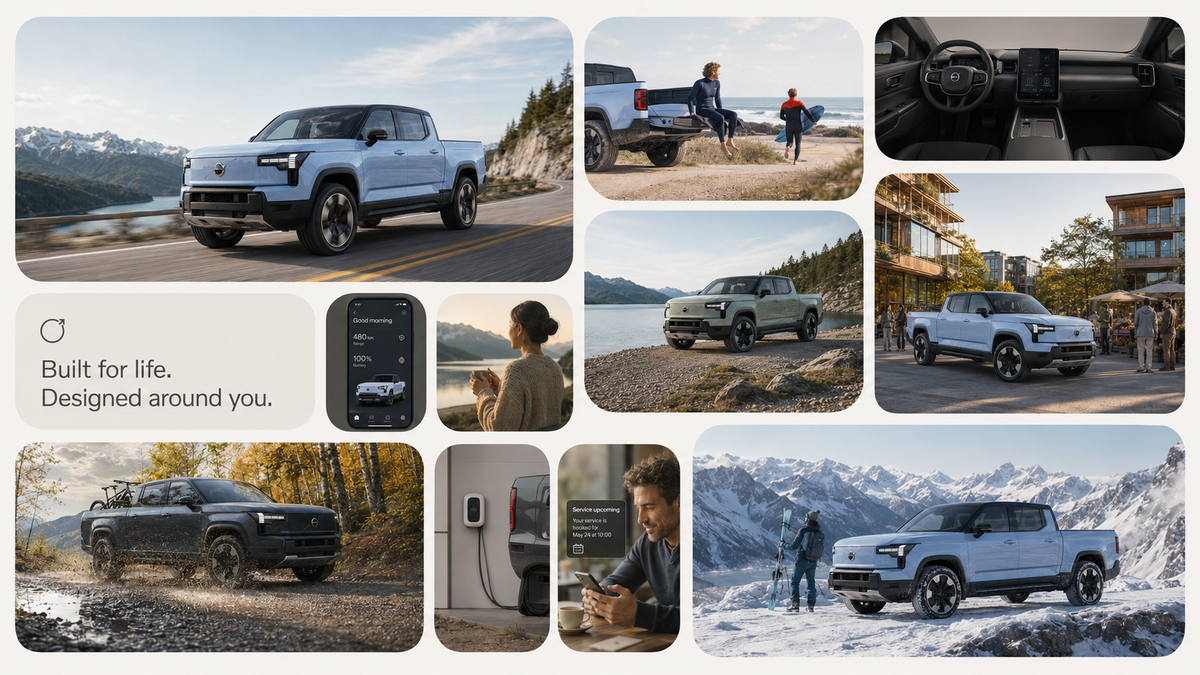
Volvo Cars does not make a pickup. This one has no CAD, no clay model, no prototype — it exists only as a ruleset: a face signature, a stance, a palette, a brand attitude. Everything on this page was designed and produced through that system in a few days. Campaign-grade product imagery traditionally arrives late. It needs frozen surfaces, studio CGI, agency timelines — weeks per scene. But design and product organizations need the product story much earlier: to align stakeholders, explore colorways, test positioning — often before the design itself is settled. This study answers a narrow question: how far can one person take a product that doesn't exist — and how do you keep an invented product visually consistent across scenes, seasons and colorways with no 3D model to fall back on.
Independent speculative study. Not affiliated with, commissioned or endorsed by Volvo Cars. The vehicle does not exist; Volvo branding appears solely as part of a design-language study.
Independent speculative study — not affiliated with Volvo Cars.
The output looks like a campaign. The work is a system.
Teaching the brand. Before any scene exists, a curated Volvo reference
set — faces, surfacing, stance, palette — is conditioned into a ComfyUI
pipeline until the system speaks the design language natively, without
being told.
Designing through the system. The pickup wasn't prompted into
existence; it was designed through the system. I set the brief and the
market position, iterated the design across generations, and fed my
own part designs back in as references. Some decisions deliberately
depart from the brand: the surfacing is slightly hardened from Volvo's
current language, because a pickup has to carry toughness.
Identity without a 3D model. There is no CAD behind these images.
Identity is held by the reference system plus a fixed audit on every
output — face signature, wheels, badge, glasshouse, proportions.
Consistency is a workflow property, not a lucky seed.
With or without 3D. When a 3D base exists — as in my production work —
the same system runs as an enhancement layer on real renders. When it
doesn't, as here, the reference system replaces the model. The method
is the constant; the 3D data is an optional input.
The proof set below: a hero film and five scenes across a scenario
matrix — winter, forest trail, coast, urban market, alpine lake — in
four colorways. One product, one identity, many worlds.
The surfacing is deliberately hardened from Volvo's current language — a pickup has to carry toughness.
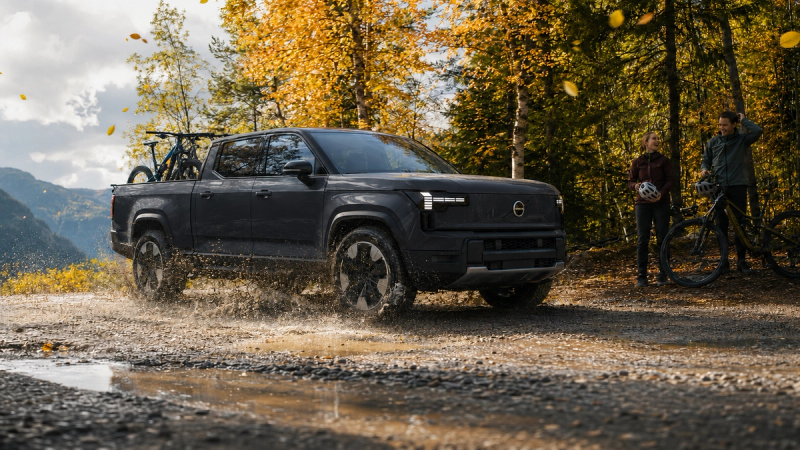
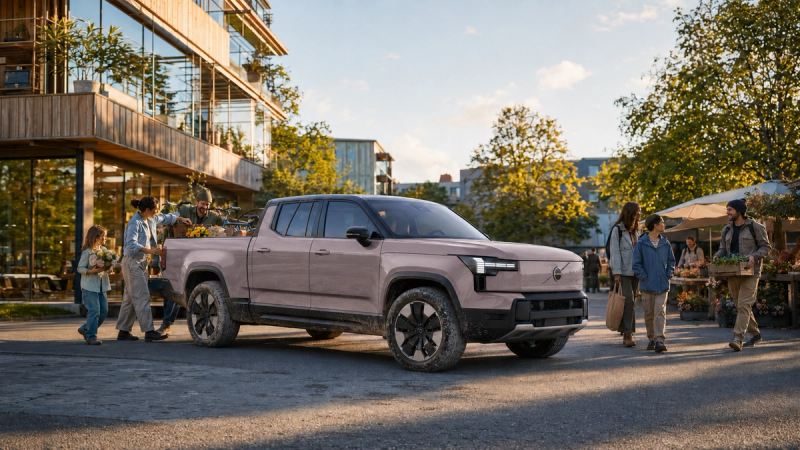
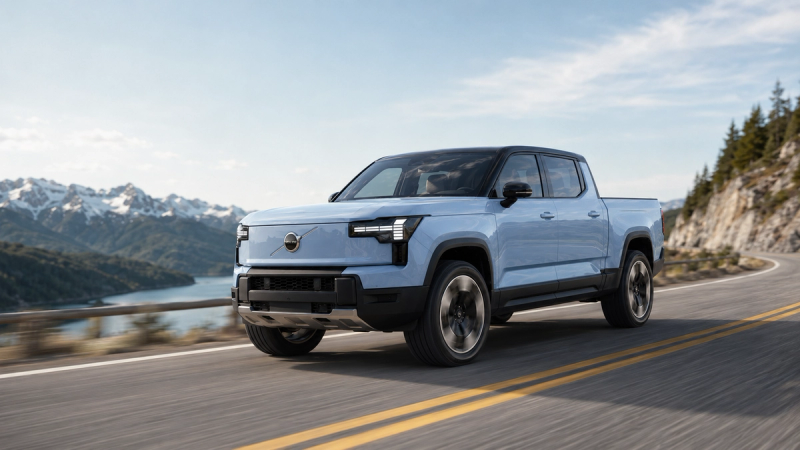
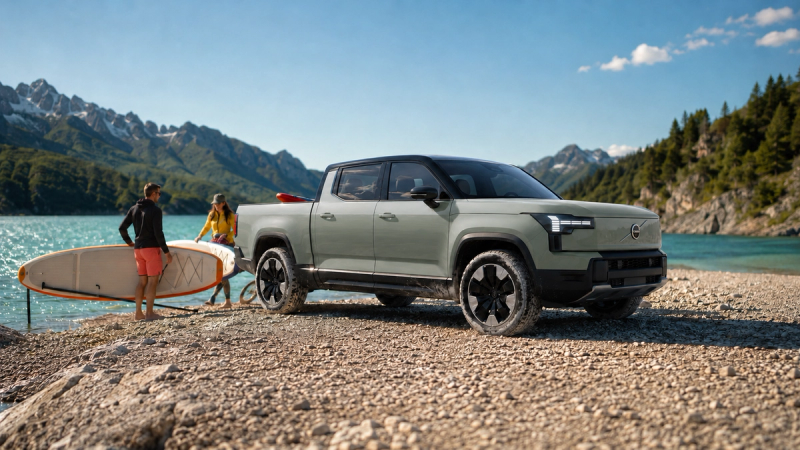
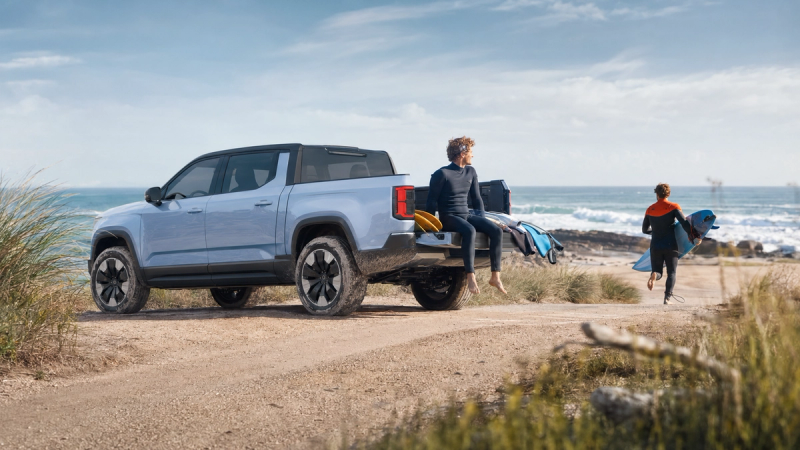
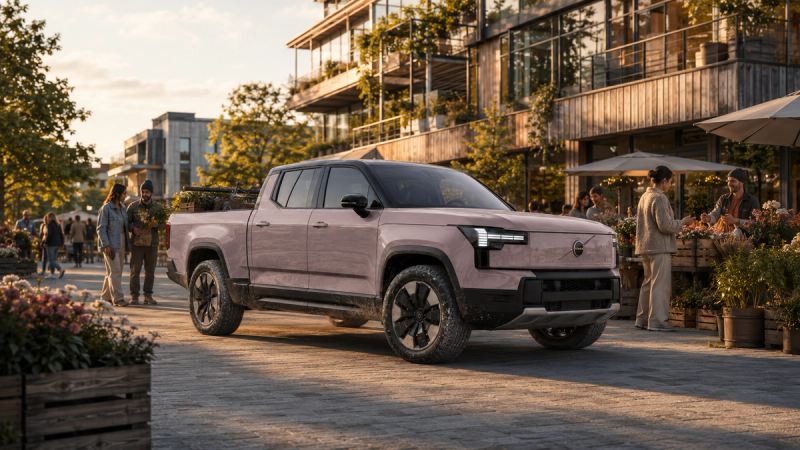
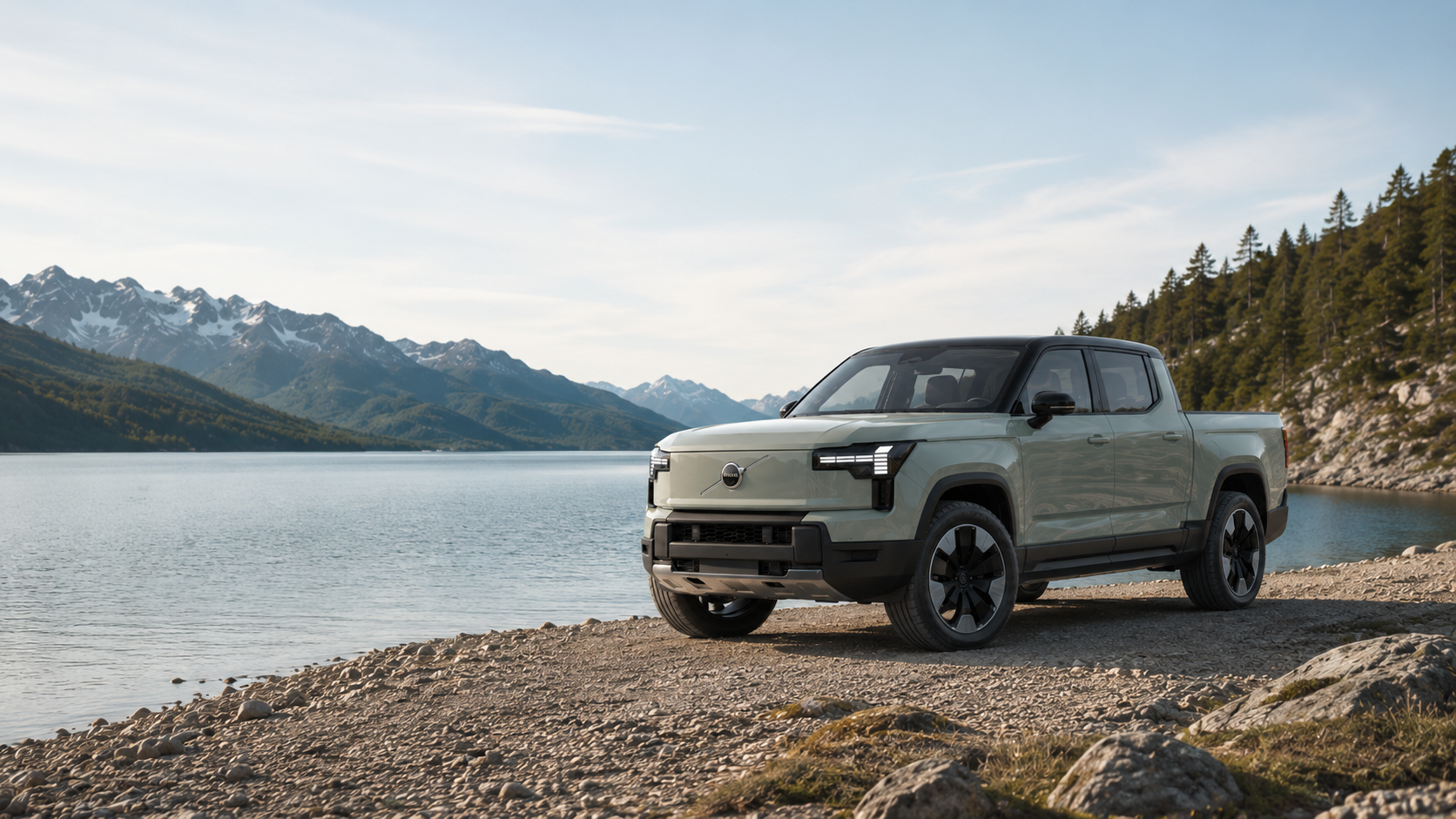
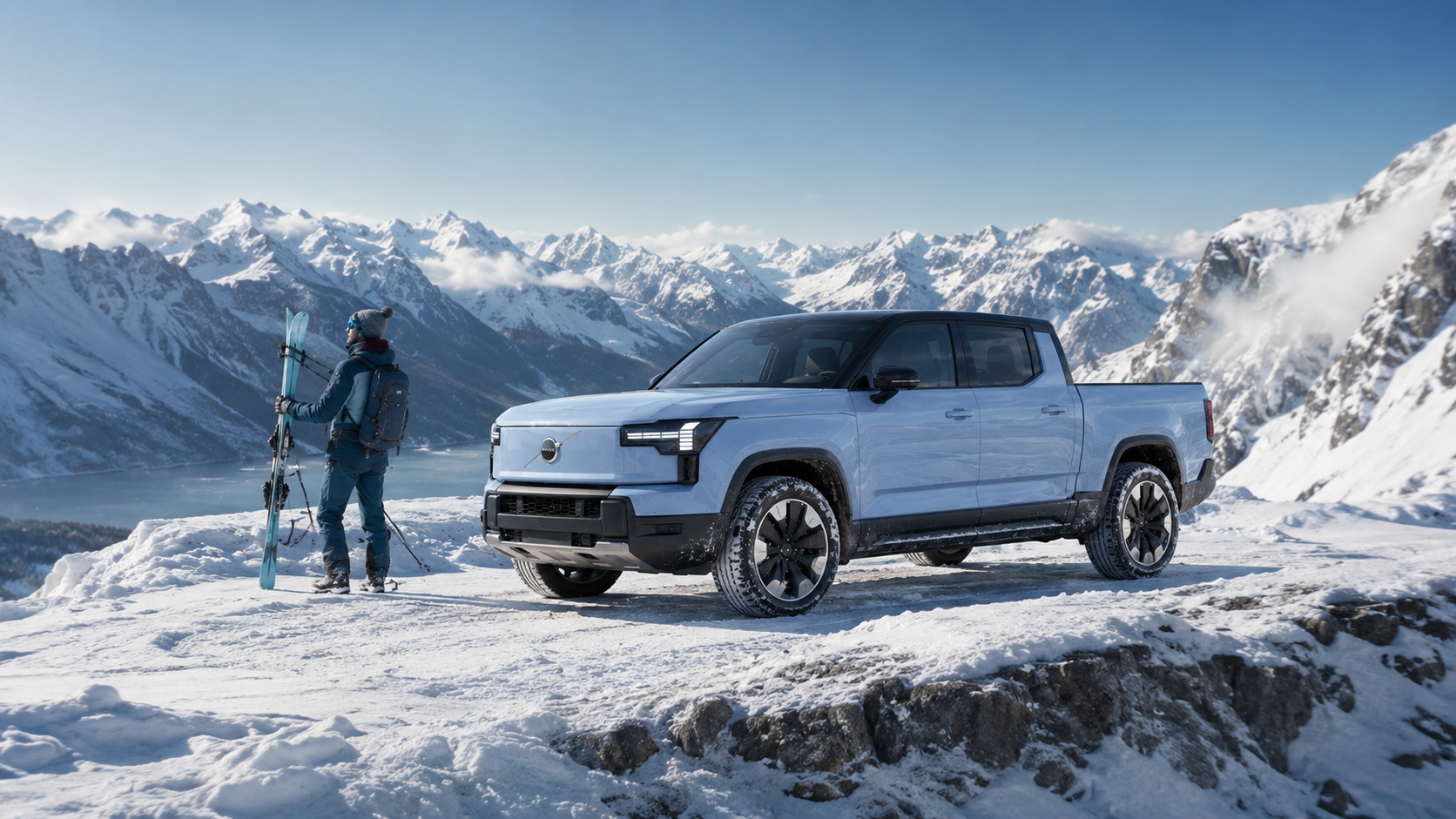
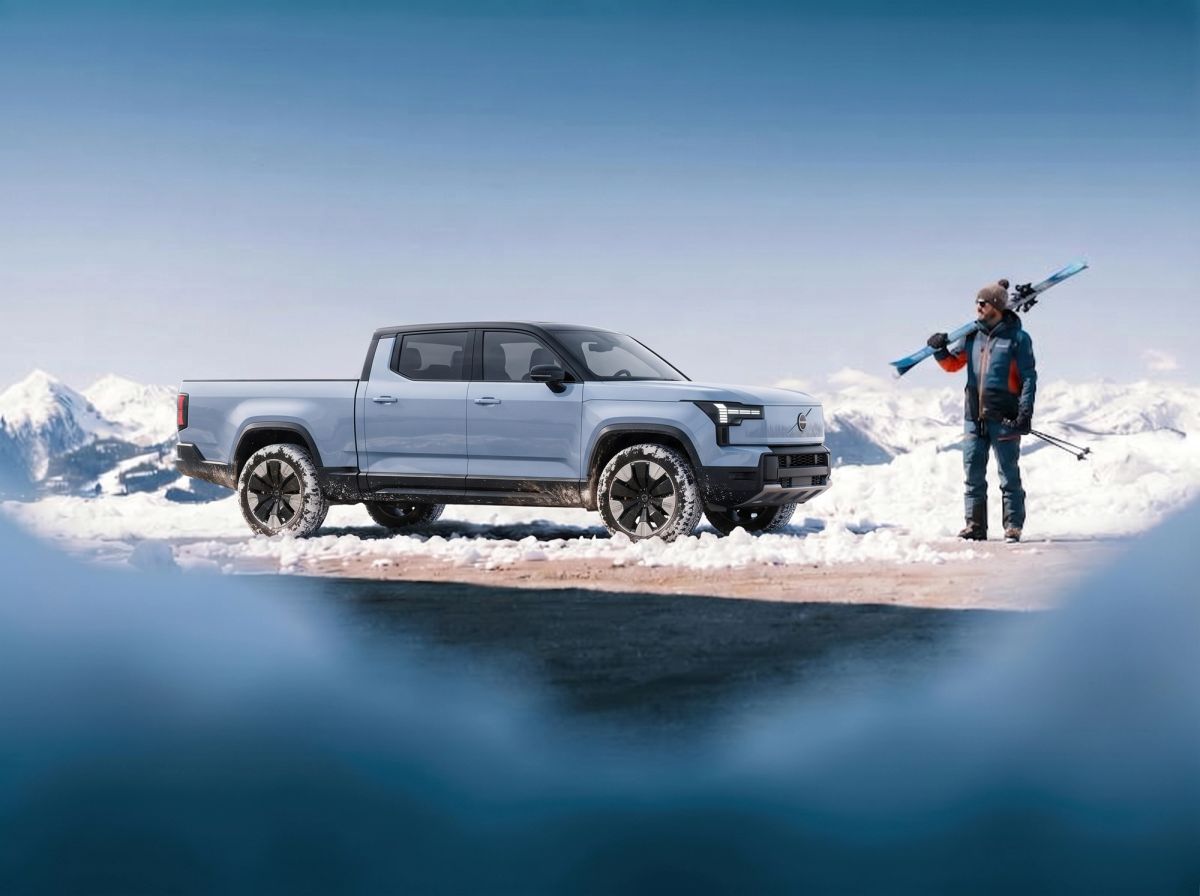
Winter, glacier blue — cold-climate end of the matrix.
This is not a one-off experiment. I designed and run the same pipeline in production at Togg for an unreleased vehicle program — used by 8+ internal teams, spanning 11 parameter groups and 160+ environment scenes, cutting visual output time by roughly 70%. That work is under NDA. This public study mirrors the method 1:1 on a subject I'm free to show. For a design organization, this capability moves the product story ahead of the CAD freeze: colorway exploration, positioning tests and stakeholder alignment at production quality — in days, not weeks. The frames are the visible part. The system that keeps an unbuilt product consistent is the actual work — and it's what I mean by Creative Technologist.