The Sample Is the Interface — A Tangible CMF Experience for Showrooms
Developed for a mobility company, this NDA-safe reconstruction shows how NFC-linked CMF samples update a digital vehicle and its material content in a browser-based prototype.
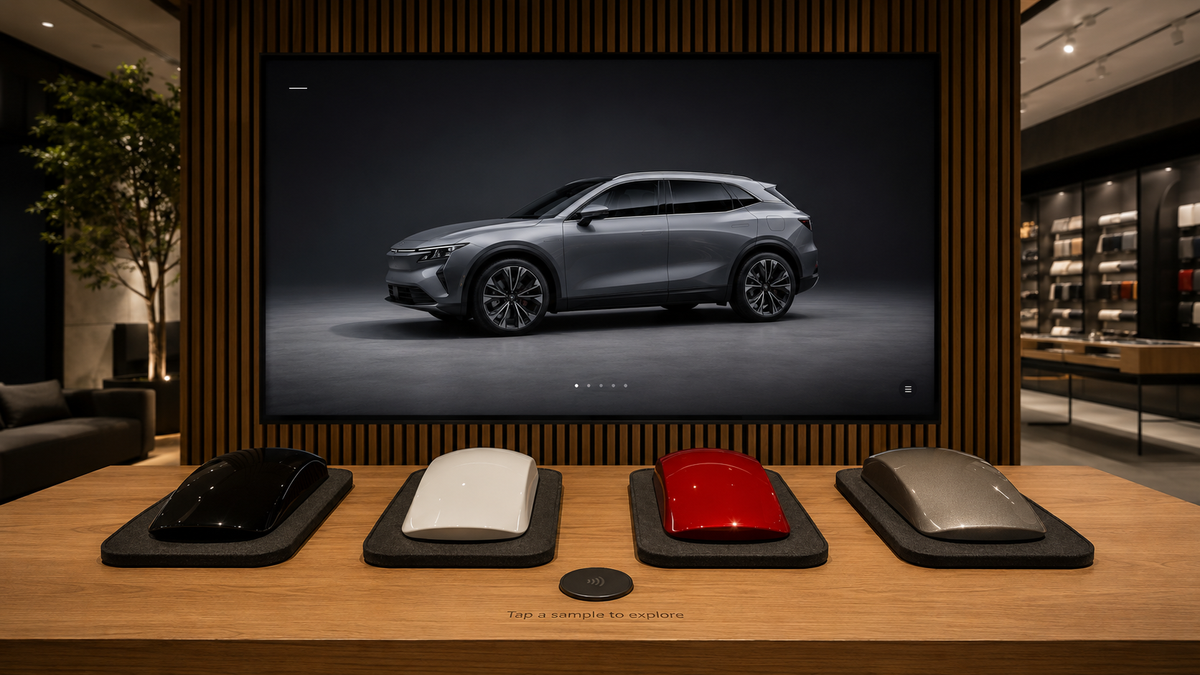
Vehicle color is still evaluated through physical material. Designers and customers need to see how a finish reacts to light, compare surface depth and hold a real sample before trusting what a screen represents. Yet in most digital showroom experiences, that physical reference and the on-screen vehicle remain separate: the sample sits on the table while color is selected through a conventional menu.
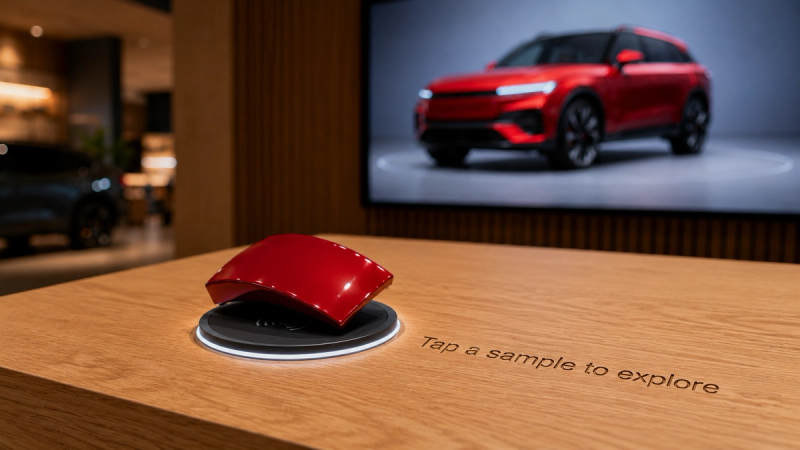
I worked on a system for a mobility company that connected those two layers. Physical CMF samples became direct inputs to the digital experience. When a sample was placed on the reader, the vehicle and its associated material content changed on screen. The interaction removed the need for a separate color menu and made the physical object itself the controller.
The original project cannot be shown publicly. This case therefore reconstructs the work from scratch with a generic vehicle, invented colorways, replacement data and a new browser-based prototype. The visible design is new; the user problem, interaction principle and system architecture are the parts carried over for discussion.
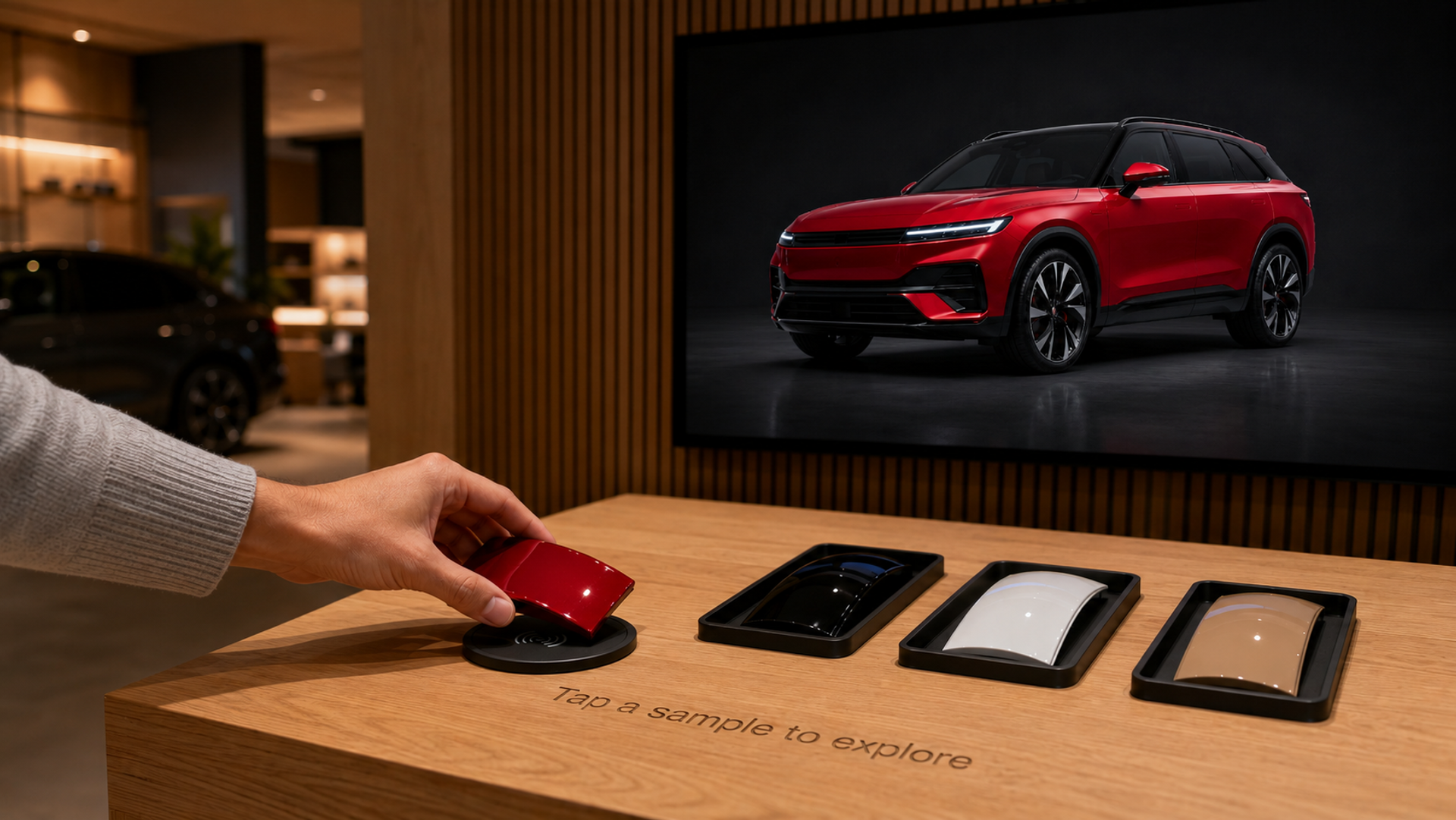
The essential interaction: placing a physical sample changes the corresponding digital vehicle state. This scene is a generic reconstruction of the original workflow.
In the public reconstruction, each plaque is assigned a unique NFC tag. When a sample is placed on the reader, the controller publishes a small event:
{ "type": "sample.placed", "tag": "04:A2:F1:6B" }
The experience application resolves that identifier against a colorway record containing the material name, finish type, paint reference and related story content. It then updates the vehicle state, loads the matching information and returns to idle when the sample is removed.
The architecture deliberately separates hardware identity from content. The reader only reports which object is present; the application owns the mapping, state and presentation. This allows color names, visual assets and descriptive content to change without rewriting the hardware layer.
For this public version, NTAG213 tags, a PN532 reader and an ESP32 are used as accessible off-the-shelf components. These are reconstruction choices, not a disclosure of the original production hardware. What is transferred from the mobility-company project is the architectural principle: a physical sample produces a simple event, the application resolves that event into product state, and one shared content model drives the screen.
The broader content structure can support additional product areas, but this case demonstrates the exterior colorway loop because it is the clearest point where physical material and digital representation need to remain connected.
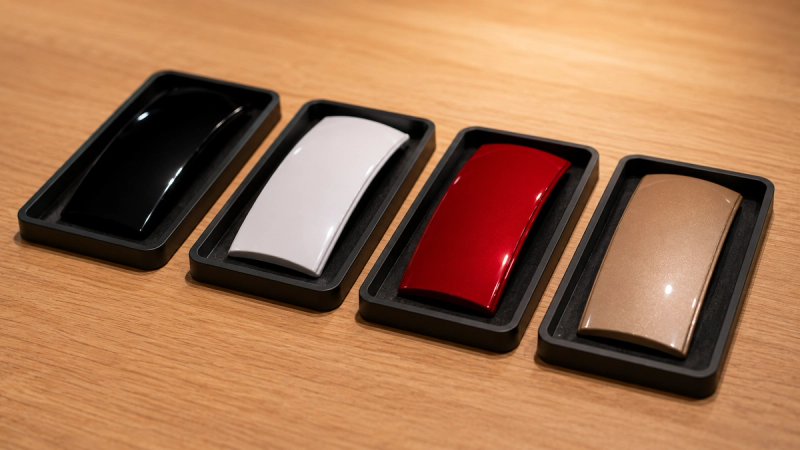
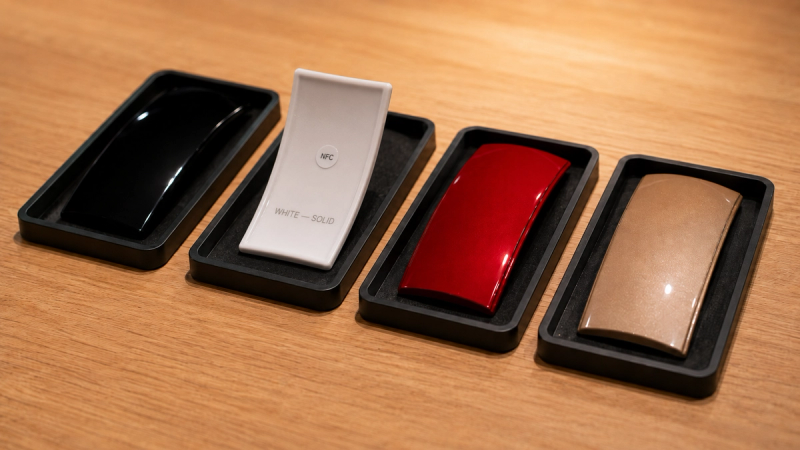
The browser experience below reconstructs the core interaction without exposing the original software or assets. Pointer input stands in for the physical NFC reader: select a sample, place it on the reader and observe how the application resolves the event into a new vehicle state.
The prototype is included to make the system behaviour inspectable rather than presenting the work only through images. Its materials, interface and data were created specifically for this public case study; they are not extracted from the original mobility-company project.
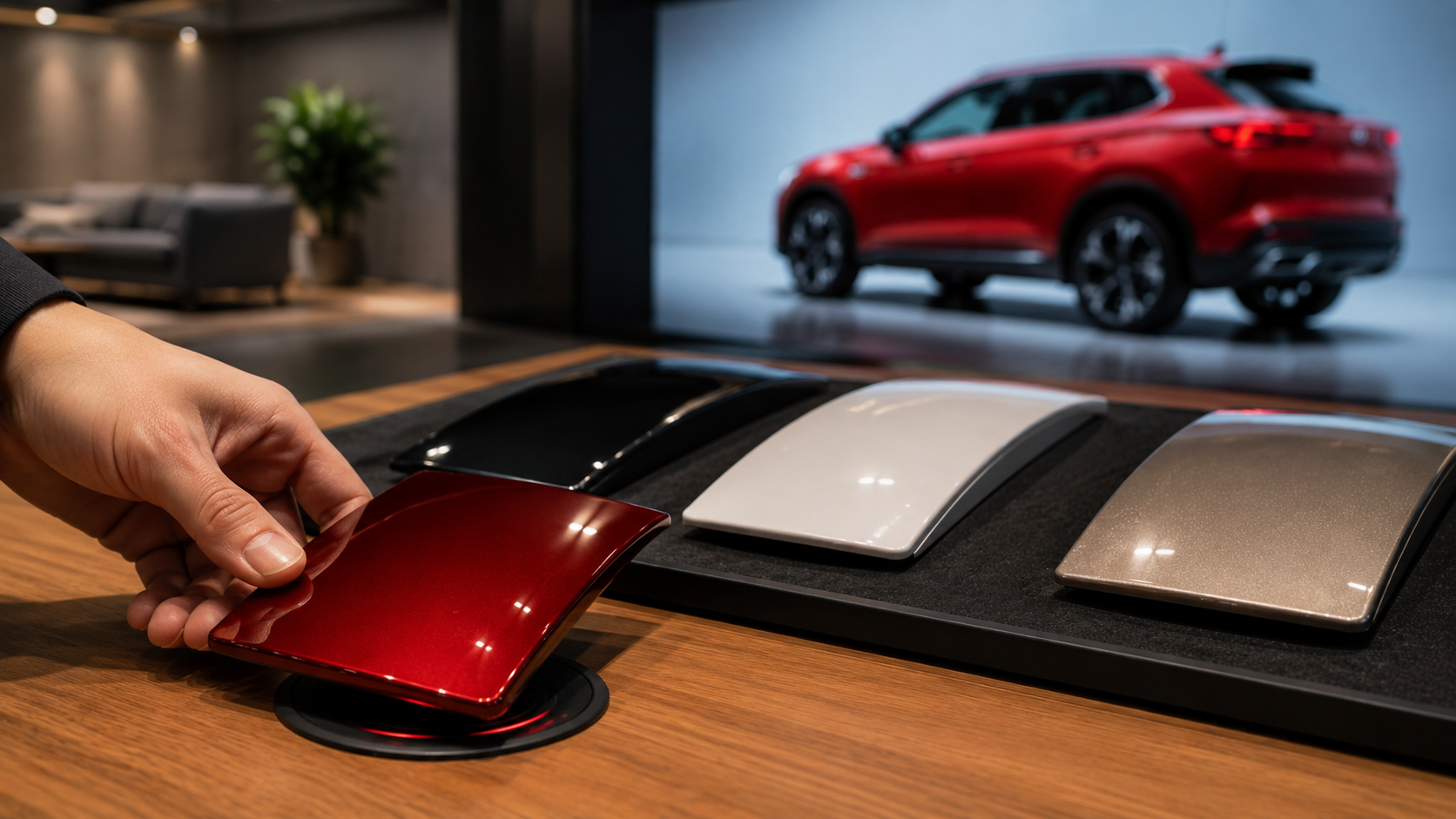
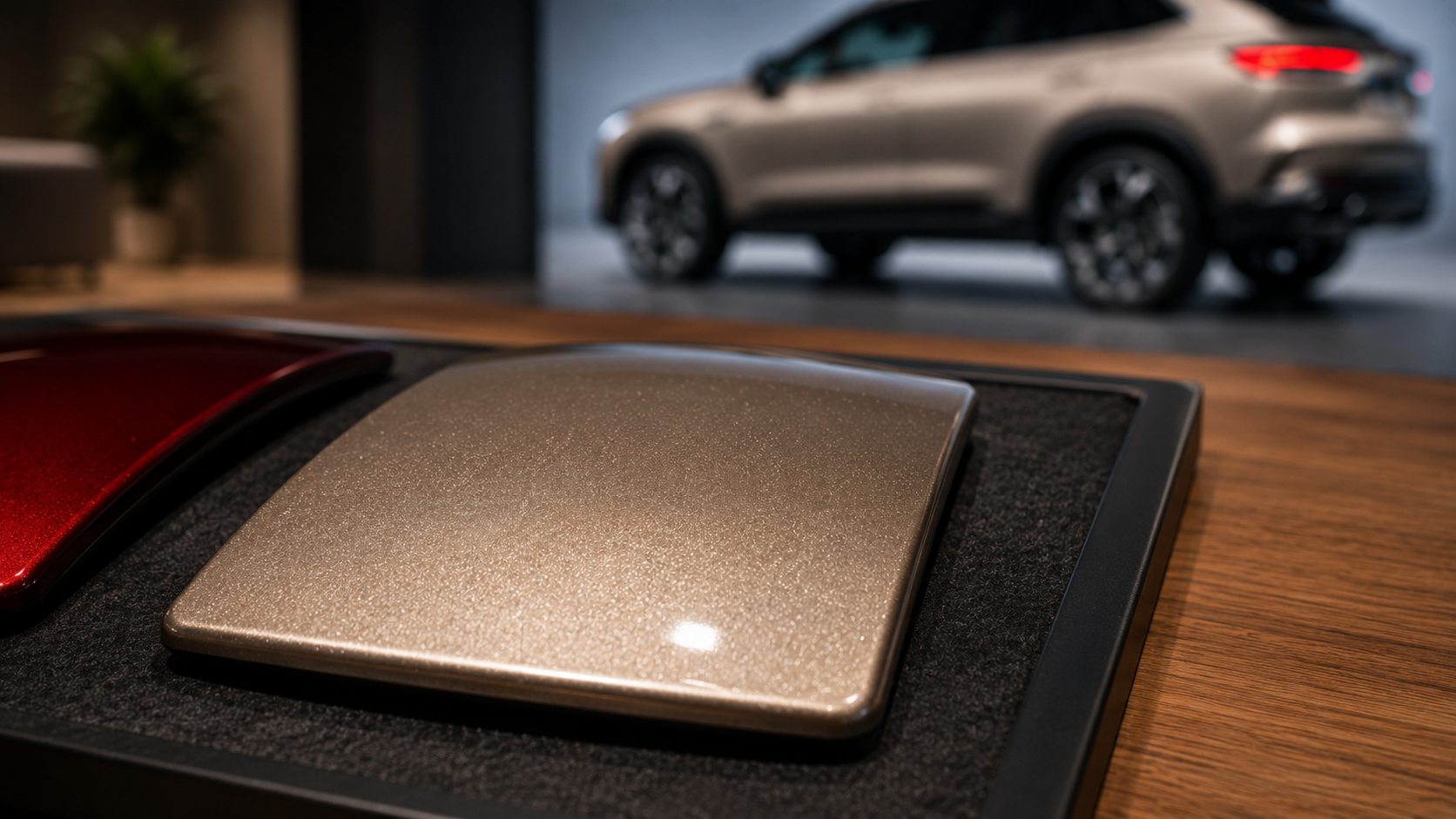
This is a documented professional project, not a speculative concept. The original system was developed within a mobility company, but the original installation, interface, vehicle data and implementation details cannot be published. To make the work discussable without exposing confidential material, I rebuilt the public-facing case with a generic vehicle, invented colorways, recreated interface states, replacement data and a new browser prototype. No employer assets, project names, screenshots, production files, internal data or identifying details are included.
The reconstruction preserves the parts needed to evaluate the work: the user problem, physical-to-digital interaction, event flow, state model, content structure and deployment logic. It does not claim to reproduce the original visual design or confidential implementation one-to-one. The installation images on this page are recreated presentation scenes, not photographs of the original project.
There is also a material boundary. A screen cannot reproduce automotive paint as physical truth: display gamut, calibration, ambient light and the directional behaviour of metallic finishes all affect perception. The physical sample remains the reference; the screen provides scale, context and related product information around it.
Deploying this type of system requires more than the interaction prototype: calibrated displays, sample sets tied to approved paint references, a maintainable content model, robust reader housings, cable and power management, error and idle states, and telemetry that records which samples are explored. Those operational details determine whether the experience survives outside a demo.
This project continues a recurring direction across my work: connecting physical controls, product data and real-time experiences in one operational loop. The medium changes — joysticks, rotary controls, vehicle systems or material samples — but the objective remains the same: make the digital experience respond directly to the physical product and the way people actually evaluate it.
The original project was completed for a mobility company and remains protected by NDA. All visible assets and identifying details on this page have been replaced with a generic public reconstruction. The case preserves the interaction model and system rationale without disclosing employer material.