VR Vehicle Simulation with Real Machine Controls — Unreal Engine & Arduino
Hidromek’s iF Design Award-winning HICON VRL concept, made drivable in VR with a real construction-machine joystick bridged through Arduino into Unreal Engine: physical controls, virtual machine.
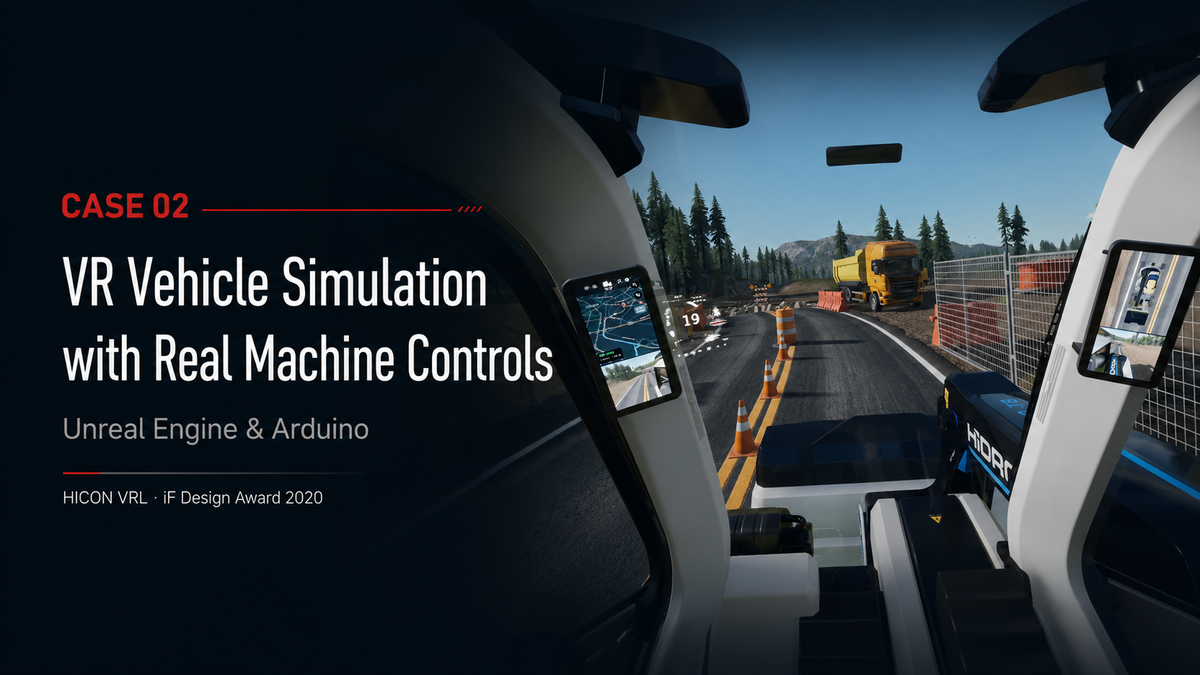
HICON VRL is Hidromek's vision of what a loader becomes when you stop assuming a fixed cabin: a fully electric concept with a 360° swivelling cab and boom and bi-directional drive, designed by the Hidromek Design Studio and awarded an iF Design Award in 2020. A machine like that has a problem renders can't solve — nobody can drive it, because it doesn't exist. Images sell the form; they say nothing about what operating it feels like.
So I built the version you could drive. I developed a VR simulation of the HICON VRL in Unreal Engine, controlled through a real construction-machine joystick that I converted into a PC input with an Arduino — the concept's operating logic, testable with the hardware an operator's hands already know.
How do you connect a real machine joystick to Unreal Engine?
The joystick speaks CAN bus — the language of machines, not desktops. An Arduino sits between the two worlds: it reads the joystick's CAN frames and re-presents the device to the PC as a standard USB HID controller. From Unreal Engine's point of view, the industrial joystick is just another input device — every axis, detent and button mapped through the engine's input system. No custom drivers, no middleware.
The point of the effort is validity. Ergonomics only mean something with real hardware: the grip, the throw, the resistance of an actual machine joystick is the study. A gamepad would have tested nothing.
On the engine side, the VRL exists as a working machine, not a prop: drivable physics, the swivelling cabin-and-boom kinematics that define the concept, and bi-directional drive — the exact behaviours that make VRL different from a conventional loader, and therefore the exact behaviours worth evaluating. In VR, scale stops being theoretical: cab height, boom reach and swing clearance are judged from the operator's seat, in the tight-site manoeuvres the concept was designed for.
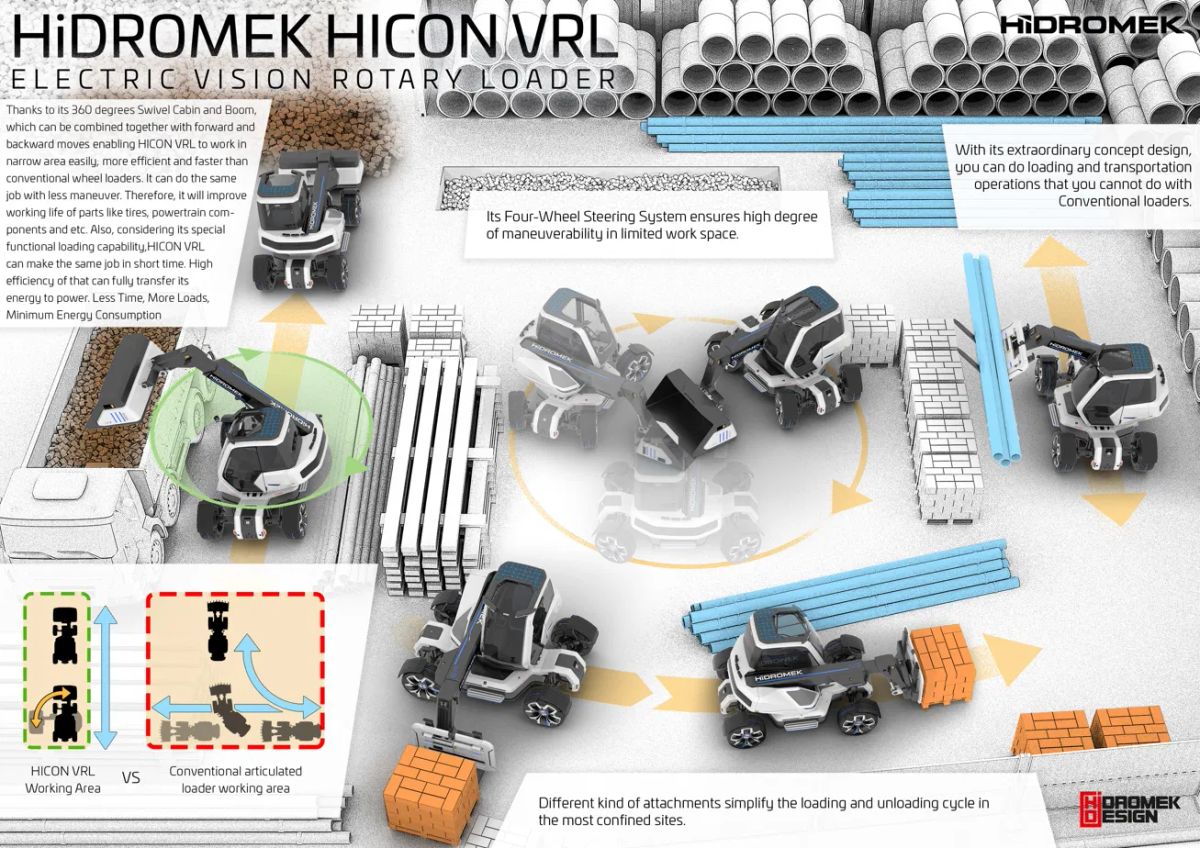
The vehicle concept went on to win an iF Design Award in 2020, and Hidromek published HICON VRL publicly. The simulation gave the studio something the board could not: the concept's defining behaviours — swivel, bi-directional drive, confined-site cycles — experienced first-hand, with real controls, before any metal existed.
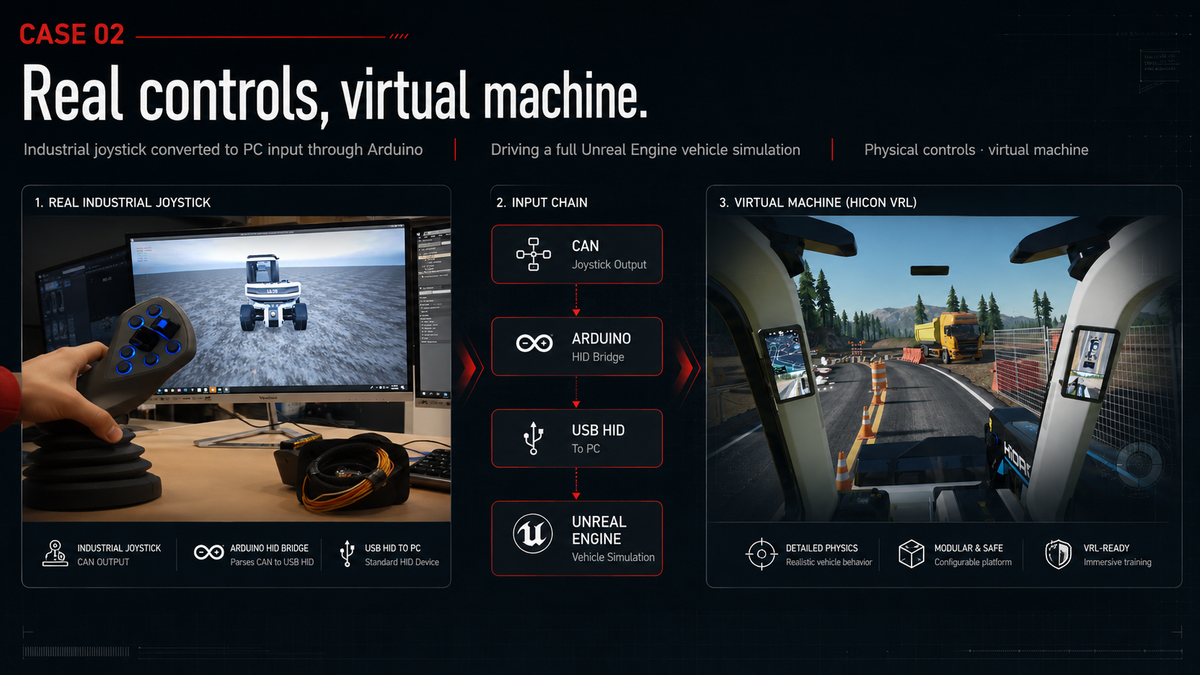
The case at a glance real controls, virtual machine. Overview card; the raw captures are above.
Role & credits. VR simulation, vehicle logic and the joystick-to-engine input chain: Kadir Özkan. Industrial design of the HICON VRL concept: Hidromek Design Studio.
Two years before Opera connected a station to a real machine over a network, this project ran the same conviction in the opposite direction — real controls, virtual machine. Together they bracket the work I care about most: the boundary between physical products and real-time software, treated as the product itself. The other direction is documented in Remote Operation Interface for Heavy Machinery.